
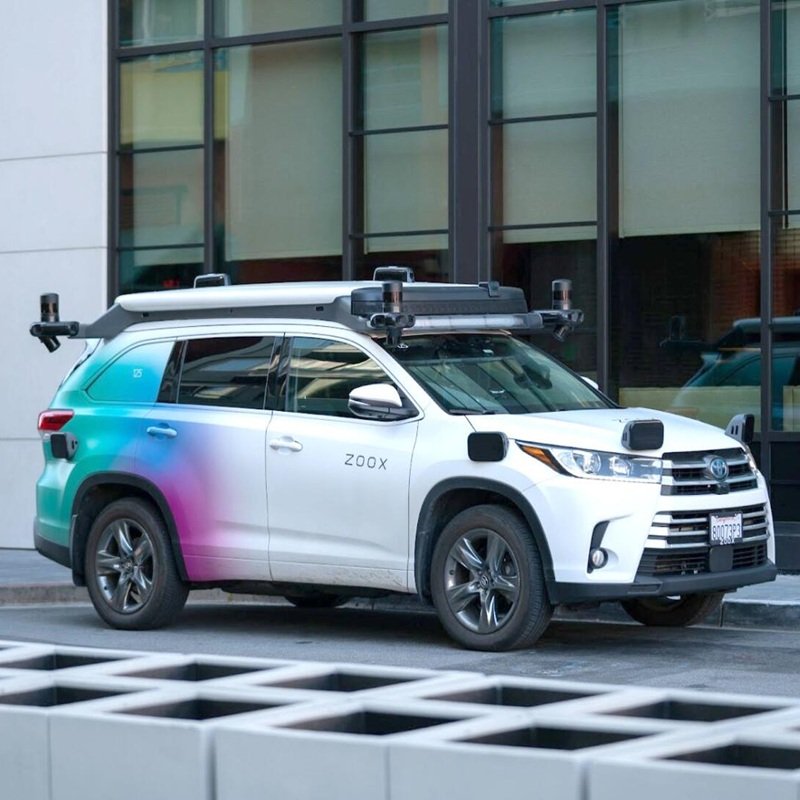

Zoox Wins NHTSA Exemption: A Breakthrough for Driverless Cars!
Zoox, Amazon’s self-driving car division, just scored a major victory.
The National Highway Traffic Safety Administration (NHTSA) granted Zoox an exemption, allowing it to test fully driverless vehicles without traditional controls like steering wheels or pedals. This decision marks a breakthrough for autonomous driving and could accelerate the future of driverless cars on U.S. roads.

Why Zoox’s NHTSA Exemption Matters?
The NHTSA’s approval is a big deal. Most self-driving cars today still have manual controls as a safety backup. But Zoox’s vehicles are designed to operate completely autonomously—no human intervention needed.
This exemption means:
Zoox can now test its driverless cars in real-world conditions.
The NHTSA believes Zoox’s technology is safe enough to bypass traditional rules.
Other companies like Waymo and Cruise may push for similar approvals soon.
How Zoox’s Driverless Cars Work?
Unlike Tesla’s Autopilot, which still requires driver attention, Zoox’s vehicles are built from the ground up for full autonomy. Here’s how they do it:
360-degree sensors – Cameras, lidar, and radar cover every angle.
AI-powered navigation – The system learns from millions of miles of driving data.
No steering wheel – Passengers sit facing each other in a futuristic pod-like design.

Zoox claims its cars can handle complex city driving, including pedestrians, cyclists, and unexpected obstacles.
Zoox’s NHTSA Vctory Isn’t Just About Testing Permission – Tt’s Rewriting the rulebook for autonomous vehicles. Traditional safety standards (FMVSS) require steering wheels and brake pedals, but Zoox proved its sensor-driven system can match Human-Level Safety.
According to NHTSA documents, Zoox’s vehicles use quad-layered redundancy:
- Primary sensors (LiDAR + cameras) scan 360° 15 times per second
- Thermal cameras detect living beings through visual obstructions
- Backup AI processors kick in if main system fails
- Vehicle-to-vehicle (V2V) networks share road hazard data
“Zoox’s approach forces regulators to rethink ‘safety’ in the autonomy era,” says Michael Brooks of the Center for Auto Safety. “Their exemption could become the new benchmark.”
Already, competitors like Ford are revising their driverless prototypes. Industry analysts predict Zoox’s sensor layout – especially its roof-mounted “sensor crown” – will be widely copied by 2026.
The Future of Self-Driving Cars in the U.S.
With Zoox’s NHTSA win, the race for autonomous vehicles just got hotter. Here’s what to expect next:
More driverless taxis – Zoox could launch a robotaxi service soon, competing with Waymo.
Regulatory changes – The NHTSA may update safety rules to accommodate more driverless cars.
Public acceptance – If Zoox’s tests go well, people may start trusting autonomous vehicles more.
Challenges Ahead for Zoox
Despite this win, Zoox still faces hurdles:
Safety concerns – Some worry about hacking or system failures.
High costs – Building driverless cars is expensive.
Competition – Waymo and Cruise are already testing in multiple cities.
Still, this NHTSA exemption is a major step forward for Zoox and self-driving technology.
Boost Your Car’s Safety with Robofinity Car Thermal Night Vision
While Zoox is pushing the future of driverless cars, you can make your current car safer with Robofinity car thermal night vision camera.
This advanced system uses AI-powered thermal imaging to:
Detect people, animals, and vehicles up to 200 meters away—even in total darkness, fog, or rain.
Warn you before collisions with real-time alerts.
Easy installation—no professional help needed.

Why choose Robofinity?
Better than regular dashcams – Sees through weather and darkness.
Affordable safety upgrade – A fraction of the cost of self-driving tech.
Proven reliability – Trusted by thousands of drivers.
If you want extra safety without waiting for driverless cars, check out Robofinity thermal vision camera today!
Final Thoughts
Zoox’s NHTSA exemption is a game-changer for autonomous vehicles. While driverless cars are still evolving, tech like Robofinity thermal camera can make driving safer right now.

